
In recent years, moviegoing has begun to feel less like experiencing a story and more like scrolling through a highlight reel of things we already recognize. Familiar characters appear not because the narrative demands them, but because audiences are expected to applaud their presence. Entire films are constructed around the anticipation of recognition rather than the development of meaning. This shift is not accidental—it is the result of a broader trend toward crossovers, shared universes, and reference-heavy storytelling that has come to dominate mainstream cinema. While this approach has proven commercially successful, it has also introduced a troubling side effect: the gradual erosion of originality, narrative cohesion and emotional depth.
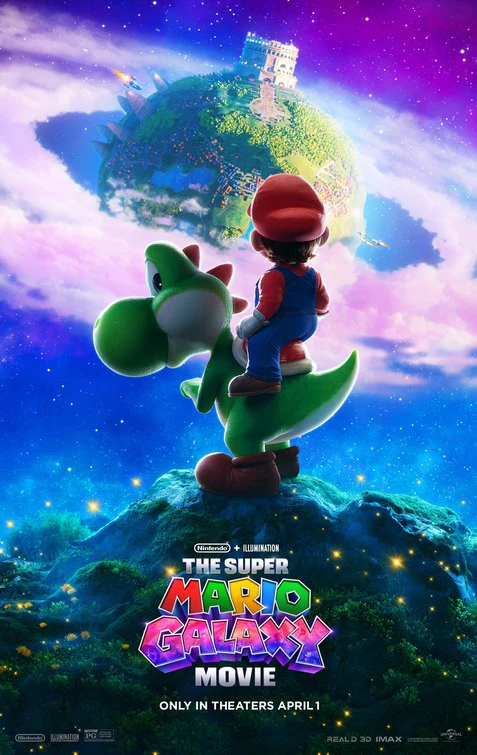
A particularly revealing example of this phenomenon can be found in the newly released Super Mario Galaxy Movie. Marketed as a bold expansion of the Mario cinematic universe, the film promised to bring together beloved characters, settings, and concepts from across decades of gaming history. On paper, it seemed like a celebration. In execution, however, it serves as a case study in how oversaturation of references and crossovers can overwhelm storytelling and ultimately diminish the impact of a film.
The Super Mario Galaxy Movie is visually impressive and undeniably energetic, but its narrative feels secondary to its mission of inclusion. Characters appear in rapid succession, often with little introduction or purpose beyond their recognizability. Entire scenes are constructed around callbacks—musical cues, visual gags, and direct references to earlier games—that function more as audience triggers than as meaningful story elements. For longtime fans, these moments may produce brief excitement. But for many viewers, especially those unfamiliar with the full scope of Mario lore, the experience can feel disjointed and inaccessible.
This is the central problem with crossover-heavy storytelling: it prioritizes familiarity over substance. Instead of asking, “What story do we want to tell?” filmmakers are increasingly asking, “What can we include?” The result is a kind of narrative overcrowding, where the film becomes less about progression and more about accumulation. In the case of Super Mario Galaxy Movie, the inclusion of multiple galaxies, power-ups, and characters from across the franchise creates a sense of scale, but not necessarily a sense of purpose. The story moves quickly, but it rarely pauses long enough to develop its ideas or emotional stakes.
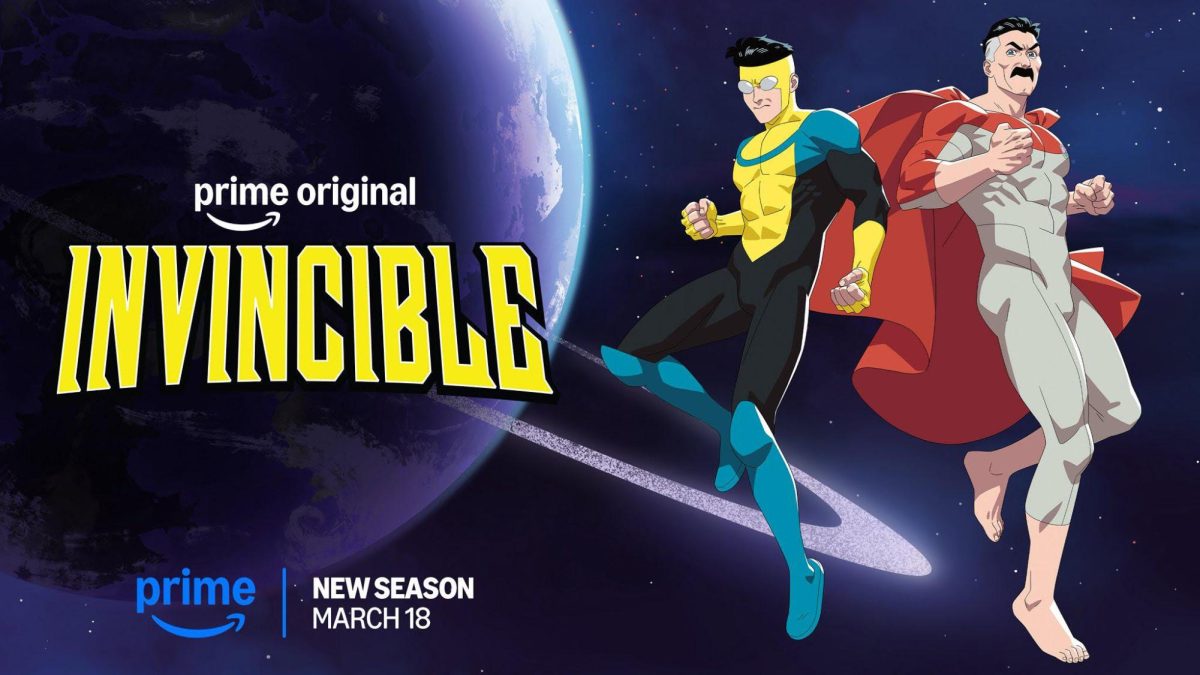
This trend did not emerge in a vacuum. Much of it can be traced back to the massive success of ensemble superhero films, particularly those that brought together multiple established characters into a single narrative. These films demonstrated that audiences were eager to see crossovers, and studios took note. What began as a novel concept gradually became an expectation, and eventually, a formula.
The influence of these ensemble films can be seen across the industry. Major studios are now racing to build their own interconnected universes, often prioritizing long-term franchise potential over individual film quality. Upcoming superhero projects from multiple studios are being designed with crossover potential in mind from the very beginning. Characters are introduced not because they serve the current story, but because they may be useful in a future installment. Post-credit scenes tease connections rather than provide closure. The film becomes a chapter in a larger system, rather than a complete experience in its own right.
This approach has significant consequences. When every film is part of a larger network, it becomes increasingly difficult for any single story to stand alone. Viewers are expected to have prior knowledge, or at least a willingness to accept gaps in understanding. Emotional moments lose their impact when they rely on external context. Character arcs are stretched across multiple films, often leading to uneven development. In trying to create a sense of continuity, studios risk sacrificing coherence.
The issue is not limited to blockbuster franchises. It has also begun to influence other genres, including horror. In recent years, there has been a surge in low-budget horror films that repurpose public domain or copyright-free characters. Familiar figures from childhood stories are reimagined in darker, more violent contexts. While this concept can be creatively interesting, it is often executed in a way that prioritizes shock value over storytelling.
Films based on characters like Winnie-the-Pooh or Steamboat Willie rely heavily on the audience’s pre-existing relationship with these figures. The contrast between their original innocence and their new, more sinister portrayals is intended to create intrigue. However, this reliance on recognition can become a crutch. Instead of developing original characters or narratives, these films lean on the novelty of their premise. The result is often a shallow experience that feels more like a concept than a fully realized story.
A similar pattern can be observed in the growing number of video game adaptations. The anticipated Five Nights at Freddy’s 2 film, for example, faces the challenge of expanding an already complex and lore-heavy universe. The original game series is known for its layered storytelling and hidden details, which fans have spent years analyzing. Translating this into a film format requires careful balance. Too much exposition can overwhelm the viewer, while too many references can distract from the central narrative.
If the film leans too heavily on callbacks—specific animatronics, locations, or plot points—it risks alienating new audiences while offering only surface-level satisfaction to existing fans. This is the paradox of reference-driven storytelling: it aims to please everyone, but often ends up fully satisfying no one. The more a film tries to include, the less it is able to focus.
Returning to Super Mario Galaxy Movie, this tension is evident throughout. The film attempts to serve multiple purposes at once: a continuation of the Mario story, a tribute to the games, a setup for future installments, and a standalone adventure. In trying to do all of these things, it struggles to fully succeed at any of them. The emotional core of the story—Mario’s journey, his relationships, his challenges—is frequently overshadowed by the need to introduce the next reference or cameo.
This is not to say that crossovers and references are inherently negative. When used thoughtfully, they can enhance a story, adding layers of meaning and rewarding attentive viewers. The problem arises when they become the primary focus. A reference should support a narrative, not replace it. A crossover should emerge naturally from the story, not dictate its structure.
There are examples of films that have successfully balanced these elements. In these cases, the filmmakers treat the story as the foundation, using references as tools rather than goals. Characters are given space to develop, and the narrative is allowed to breathe. The result is a film that feels cohesive and engaging, regardless of the viewer’s familiarity with the source material.
Unfortunately, this approach is becoming less common. The pressure to create interconnected franchises and maximize audience engagement has led to a shift in priorities. Studios are increasingly focused on building ecosystems rather than telling stories. Metrics such as opening weekend performance, streaming numbers, and social media buzz often take precedence over critical reception or long-term impact.
This shift also affects how audiences engage with films. Viewers are encouraged to look for clues, connections, and Easter eggs, sometimes at the expense of emotional immersion. The experience becomes more analytical than emotional, more about recognition than reflection. While this can be enjoyable in moderation, it can also create a sense of fatigue. When every film demands this level of attention, the novelty begins to wear off.
The broader consequence is a kind of creative stagnation. When studios rely heavily on existing properties and familiar elements, there is less incentive to take risks. Original stories struggle to gain traction, particularly in the mainstream market. New voices and perspectives may be overlooked in favor of established brands. Over time, this can lead to a homogenization of content, where films begin to feel interchangeable.
Many teens today are growing up in a media environment dominated by franchises and shared universes. Their understanding of storytelling is shaped by these structures. While there is nothing inherently wrong with enjoying crossover films, it is important to recognize their limitations. Critical engagement with media involves asking questions about how and why stories are told in certain ways.
The Super Mario Galaxy Movie provides an opportunity to have these conversations. It is a film that reflects the current state of the industry—ambitious, visually impressive, and deeply interconnected, but also burdened by its own complexity. By examining its strengths and weaknesses, students can gain insight into the broader trends shaping modern cinema.
Ultimately, the future of film will depend on the choices made by both creators and audiences. Filmmakers must decide whether to prioritize short-term engagement or long-term storytelling. Audiences must consider what they value in a cinematic experience. Do we want films that surprise us, challenge us, and move us? Or are we content with films that simply remind us of what we already know?
Crossovers and references are not going away. They have become an integral part of the industry. But their role can—and should—be reconsidered. Instead of dominating the narrative, they should complement it. Instead of replacing originality, they should coexist with it.
Cinema, at its best, is a medium of imagination. It allows us to explore new worlds, encounter new ideas, and experience stories that resonate on a deeply human level. When that imagination is constrained by the need to constantly reference the past, something is lost. The challenge moving forward is to find a balance—to create films that honor what came before without being defined by it.
If the Super Mario Galaxy Movie teaches us anything, it is that more is not always better. Sometimes, the most powerful stories are the ones that know when to stop, when to focus, and when to let the narrative speak for itself.