Welcome back! Are you ready to start the show?
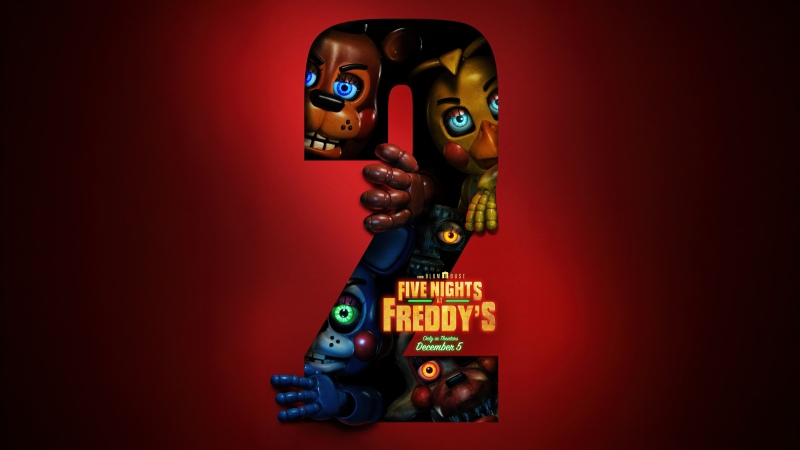
The iconic video game series of ‘Five Nights at Freddy’s’ returns to the big screen with its brand new cinema sequel. As the Fazbear gang returns to local theaters, we are presented with a film that has its ups and downs, yet presents a story that has an overall narrative on the theme of control, many jam packed easter eggs for hardcore fans, and further development on characters who are alien to the games. With lead writer and creator of the game franchise, Scott Cawthon, and lead director of the film, Emma Tammi, we’re given an hour and 44 minutes of jumpscares, twists, gut-wrenching moments, and thrills all the way.
The premise of the film directly takes place after the first film. Mike Schmidt and Abby Schmidt are recovering after the events of the first movie’s ending, where the previous main antagonist had been defeated through his own springlock failure, William Afton. Abby is attempting her best to adjust to the real world without her previous animatronic friends from the first film. It gets harder by the day however, as she misses them too much and can hardly adjust to the real world after what happened at the previous Freddy’s. When Mike is shown trying his best to adjust, we are shown a conversation between him and Vanessa Afton to catch up after what has happened. As Mike tells Vanessa to face her fears of her father, who is no longer present, she goes on in the film to try and stand up to him in her dreams as much as she can.
When the film touches up on the theme of dreams again, we get more development on the other protagonist of the previous film, Vanessa. Last time Freddy’s was on screen, we had gone through the character development of Mike trying to fight his dreams to overcome the loss of his younger brother, Garret Schmidt. A major positive of the film this time around, is now focusing on the perspective of Vanessa’s dreams, and how she is now using them to overcome her own conflicts with her father. Vanessa felt like one of the looser plot lines in the previous film, being thrown into the story like a wrench in the climax. With the ultimate conflict of last film revealing Vanessa to be William Afton’s daughter, the second film this time around majorly increases the positives of her character by developing the story of her and the fight against William.
While the exposition in the film is happening, we are eventually introduced to a new Freddy Fazbear’s Pizza location. Actually, the first Freddy’s location. With the new overarching plot focusing on the first location that had existed back in 1982, we are introduced to the new animatronics. Toy Freddy, Toy Bonnie, Toy Chica, and the Mangle. The film utilizes these characters, and eventually introduces Abby back to them. When Abby finds out about this previous location, she immediately runs to it without Mike knowing to get a chance to see her friends again. When Abby arrives at the location, she is greeted by Toy Chica.
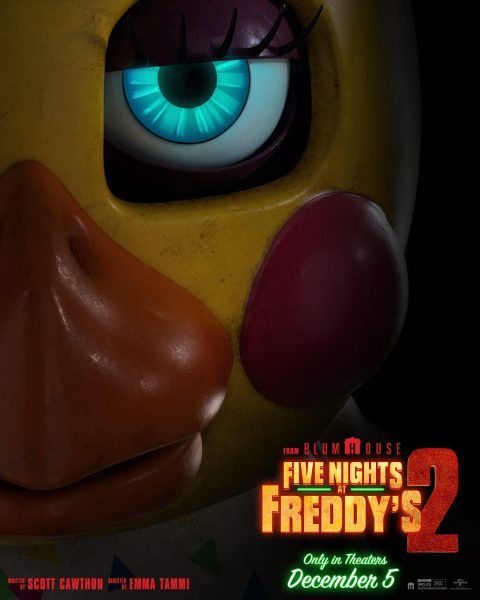
Unfortunately, with the toy animatronics and their presence in the film, the plot immediately runs into a major issue. With Abby having her favorite animatronic being Chica, the film tries to take a turn and only majorly focus on Toy Chica, who is voiced in the film by Megan Fox. This comes up as a negative for the film’s rating, because there is no inherent reason for Toy Chica to be more important than the other Toy animatronics. The only slight reason that is given, is because she is Abby’s favorite, a character who does not exist in the game’s universe at all. It feels awkwardly smashed into the plot, because in the franchise all 4 of the Toy animatronics are just as important as one another. It would even at least make a little more sense if the most important of the 4 was the one the series was named after. The excuse of making a previously established character of Toy Chica more important than Toy Freddy, Toy Bonnie, and the Mangle just because of this new movie character is a sad note that has the fans wanting to see more of the other 3, besides the one minute of screen time they get each.
When the new location is introduced, we are also given the story of the new antagonist of the film, Charlotte Emily. Charlotte was a child who had consistently visited Freddy Fazbear’s 1982 location from time to time, but one fateful day when she had gone there, she had been murdered by William Afton himself when trying to save another child. Her death eventually led to her possession of the Marionette, an animatronic in the building who had the power to wirelessly control the other Toy animatronics to command them to come back to the stage. When she passed away in front of hundreds of people, her final emotion was rage, rage from the parents who had ignored her at the pizzeria when she had said there was a boy in danger from the Yellow Rabbit.
Another positive is seen through this aspect of the film, but another negative is also found. The positive side as for Charlotte being this film’s antagonist brings up a lot of points for the movie’s rating. She is interesting, has a compelling story, and brings up stories that people who were major fans of the game wanted to desperately see. With her ability of being able to control the toy animatronics, it makes her also a more threatening villain who wants to just express her rage she ultimately feels. However, with Charlotte being the villain, it brings up the negative of awkward world building. The film does well this time around with further giving us some development on the characters of Mike, Abby, Vanessa, and even William. But with Charlotte being one of the first kills William ever committed, it feels awkward that it is expected from watchers to suddenly understand why and how this event happened. To a hardcore FNAF fan, it of course makes sense why Charlotte is important, but to someone who doesn’t even know who Freddy Fazbear is, it can feel so abrupt so quickly. We are expected to believe that with how many connections Charlotte had to every character in the film, that her unexpected appearance now makes sense after the events of the first film, in which it ultimately does not from a movie perspective. Not only that, but when we are introduced to the father of Charlotte, Henry Emily, he is not as important as he should be to the entire plot of the movie. Outside of appearing in only one scene, this is another case of the character being thrown into the film just for the satisfaction of a fan pointing at the screen at the cool cameo that was given to us.
When Charlotte and her eventual take over is introduced, both Mike and Vanessa are trying their hardest to prevent the Toy animatronics from causing chaos across the town from Charlotte’s control. In response to Mike trying to destroy the Toy animatronics from the inside, Charlotte activates the Withered animatronics that were inside of the same pizzeria in the Parts & Service room. Withered Freddy, Withered Bonnie, Withered Chica, and Withered Foxy are brought back to life through the wireless system, and are set on the mission to kill Mike.
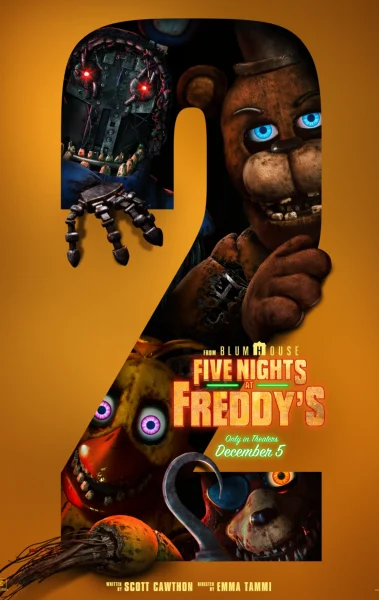
An incredibly major critique of the film comes up yet again through the Withered animatronics. With yet again how important these guys were to the game franchise, and the actual second game of FNAF in general, their major lack of screen time is incredibly disheartening. Withered Freddy had 53 seconds of screen time, Withered Bonnie had 23 seconds, Withered Chica had 55 seconds, and Withered Foxy had 32 seconds. All four of these characters had a total of 2 minutes and 43 seconds of screen time combined. With how important these characters are meant to be to the original game’s story, this is also a completely insane oversight the movie had. If you are brand new to the FNAF franchise, you would have no idea that the Withered animatronics are meant to be the prototype designs from just watching the film alone, which is a detail that would give more incentive to the plot in general.
As the movie begins to wrap up however, the ultimate climax begins, and we see all 3 of our main characters trying their best to fight off the Toy animatronics. From a threatening appearance in some homes from Toy Freddy and Toy Bonnie, a secret home invasion against Abby from the Marionette and Toy Chica, a fight against the Withereds plus Balloon Boy against Mike, and a car fight scene against Vanessa and the Mangle, the climax picks up quickly and does not pull its punches against the viewers.
The final positive point of the entire film is the super enthralling climax. The story has been leading up to this moment this entire time, and it was a super positive feat of the entire film. Despite some small screen time, there was at least some sort of excuse of a plot point that every character, animatronic, and plot twist got here near the end of the film. Everything that was building up to this moment had felt a mix between super highs, and dramatic lows. This was a great standpoint of the film however, especially with the major plot twist that was revealed to us. There were many plot twists and reveals that were sprinkled through this film to build up the eventual end to the trilogy through the confirmed third film in the series. All of them had made the viewing experience of the movie greater than ever.
With great new development on the previous film’s characters, potentially underused Toy animatronics, a compelling villain that unfortunately brought weird worldbuilding, missed opportunities from specific animatronics, and an absolutely awesome climax, the film Five Nights at Freddy’s 2 was a surprisingly enjoyable watch. With the criticisms that were brought up in the review, it cannot be ignored that the movie was an absolute joy to watch, especially if you are a major fan of the franchise. As the film ends, we are unfortunately left with a disappointing and obvious cliffhanger, but we are also given two post credit scenes that make the entire world excited for the events of the third film. After sitting on it for some time, the Five Nights at Freddy’s 2 film falls to around the 7/10 area. An enjoyable experience for those that are enthralled in the Fazbear name, but an awkward one for those who aren’t.