The Israel-Palestine conflict didn’t start in 1948 when Israel declared statehood. The land Israel currently occupies has been disputed for hundreds of years, dating all the way back to the Crusades. Jumping towards the present day, looking back from October 7, 2023, and forward, Palestine is evidence of another holocaust.
On October 7, 2023, Hamas bombed an Israeli concert, killing 1,200 people. The following day, October 8, 2023, Israel began its relentless bombing and terror on the Palestinian people. Since October 8th, over 300,000 Palestinians have been killed, thousands more are trapped under the rubble, held hostage, or are missing. Over 200,000 people are wounded, including bombing wounds, amputees, starvation and infections. Over 240 journalists have been killed in Gaza.
Not only have Israel killed Palestinians, but also their own people by accident. In January of 2024, around 20% of all Israeli deaths in Gaza were due to friendly fire or accidents. In December of 2023, Israel mistakenly killed three of their own hostages. Military missions are planned and thought out; Israel allows the IDF soldiers to go around and shoot whatever moves.
Since Israel’s founding in 1948, Israel has committed hundreds of war crimes. War crimes are violations of international criminal law established by the United Nations General Assembly, the International Law Commission and the Sixth Committee. The International Criminal Court (ICC) has jurisdiction in occupied Palestine, specifically for war crimes committed. Israel’s war crimes include: intentional targeting of civilians, sexual violence, rape, torture, pillage, breach of medical neutrality, enforced disappearance, targteting and murdering jousnialists, attacking protected civlians and structures, incitement to genocide, collective punishment, starvation, persecution, use of human shields, forced transfer, wanton destruction, killing prisoners of war and surrendered combatnants, murder, attacking religious buildings and hospitals, crimes agaisnt humanity and genoicde, murdering international workers and murdering healthcare workers.
In 1948, the creation of the State of Israel pushed over 750,000 Palestinians from their homes, which was over 85 percent of the population at the time. During the 1948 war, Israel was no stranger to war crimes then either. The war crimes in 1948 were: Destruction of Arab villages, psychological warfare, terrorism, over 70 massacres, crop burning, water deprivation, and well-poisoning by Israel that caused typhoid. Over 15,000 Palestinians died during the 1948 war.
Between 1952 and 1954, Israeli forces carried out several massacres in Palestine. The Beit Jala massacre occurred on January 6, 1952, when Israeli forces raided Beit Jala, a town in the West Bank. Seven Palestinians were killed, including women and children. This was one of the first times that leaflets had been left behind by IDF soldiers; this would later be a signature move by Israel for Palestinians, stating the raid was a punishment for the rape of Leah Feistinger. The United Nations Truce Supervision Organization concluded this was a breach of the 1949 Armistice agreement. The Bureij massacre occurred on August 28, 1953. IDF soldiers threw bombs into Palestinian refugee huts during the night while the refugees were sleeping. Any refugee who attempted to flee was shot. Over 20 Palestinians died. This event led to the creation of the United Nations Armistice Commission to supervise actions from Israel. The Qibya massacre occurred on October 14, 1953. At the time, the Qibya village was in Jordanian-controlled West Bank. Over 45 homes were destroyed along with a school and a mosque. IDF soldiers also broke into Palestinian houses, “clearing” the homes with grenades and guns. The Nahalin massacre happened at midnight on March 28, 1954. The Jordanian village, Nahalin, was attacked with mortars, machine guns, grenades, and bombs, murdering over 15 civilians and injuring 20 more. Homes and mosques were also destroyed by Israeli detonation bombs. Unfortunately, five national guardsmen and three legionaries from the Jordanian National Guard and the Arab Legion died after intercepting the IDF.
The Suez Canal is an internationally valued waterway. The Suez Canal Crisis began on October 29, 1956, when Israel invaded the Sinai Peninsula, which is a desert in Egypt, and the Gaza Strip. On October 31, 1956, British and French military forces joined Israel in attacking Egypt and Palestine for the Suez Canal. The British and French aren’t unfamiliar with the Middle East. Great Britain used to have colonial imperial rule over Egypt, which achieved independence in 1922, and their cotton industry, as well as Palestine, from 1920 till 1948. While the French had imperial rule in Lebanon and Syria, who gained independence on April 17, 1946. After the capture and control of Port Said and Port Fuad by the triple forces, Russia intervened. Russia at the time was under the leadership of Nikita Khrushchev, who wanted a foot in the door in the Middle East. Beginning in 1955, Russia began supplying the Egyptian military forces with arms from Czechoslovakia and threatened Western Europe with nuclear destruction if they did not withdraw. America, under the presidency of Dwight Eisenhower, threatened the three nations of Britain, France, and Israel with economic sanctions if they did not withdraw. By December 1956, Britain and France withdrew, with the now nationalized Suez Canal reopening in March 1957.
While things worked out for Egypt to an extent, Palestine couldn’t say the same. Khan Yunis was captured by noon on November 3, 1956. During Israel’s occupation of Palestine, the Israeli military murdered over 500 Palestinian civilians. These massacres that were carried out were the Khan Yunis massacre and the Rafah massacre.
In 1967, the Six-Day War began and ended. The IDF (Israel Defense Forces) murdered surrendered Egyptian soldiers, Egyptian prisoners of war, and civilians. Ten Egyptian prisoners were forced to dig their own graves before being executed by Israeli soldiers, as told by the journalist Gabby Bron, who witnessed these atrocities firsthand. Furthermore, over 325,000 Palestinians were displaced from their homes and 100,000 Syrians.
In 1995, the Egyptian government discovered two mass graves in the Sinai Peninsula that contained over sixty Egyptian civilians and military personnel who were executed by Israel. David Sultan, an Israeli Ambassador to Cairo, told Al Shaab that he alone was responsible for the deaths of over 100 Egyptian prisoners. Arieh Brioh, a Brigadier-General in reserve, admitted to murdering 49 Egyptian prisoners of war in Sinai. In June of 2000, another mass grave was reported in Ras Sedr, which contained over 52 bodies of prisoners murdered by Israeli paratroopers. Some skulls of the victims had bullet holes indicating execution. Between 1967 and 1956, over 1,000 unarmed Egyptians were murdered, even after surrendering.
Two more instances of Israel wrongfully attacking Egypt were on February 12, 1970, and April 8, 1970. On February 12th, Israel’s air force launched an airstrike on the civilian metal factory, Abu Zaabal, killing over 80 workers out of the 1,300 that worked there, and injuring 70 others. Israel claimed that the factory was being used for military purposes. In the present day, countries like the United States and Israel still use that claim to attack countries and buildings, like in Iraq and Iran. On April 8th, the Israeli air force bombed a primary school in the Egyptian town of Bahr El-Baqar. Four American F-4 Phantoms, which are supersonic jet interceptors and fighter bombers, were used to drop these bombs. The bombing led to over 46 children’s deaths, and over 50 people were injured. Those who were injured were left with permanent disabilities like amputated limbs. Israel once again used the claim of “military installation,” but rather this time, deemed the bombing an accident.
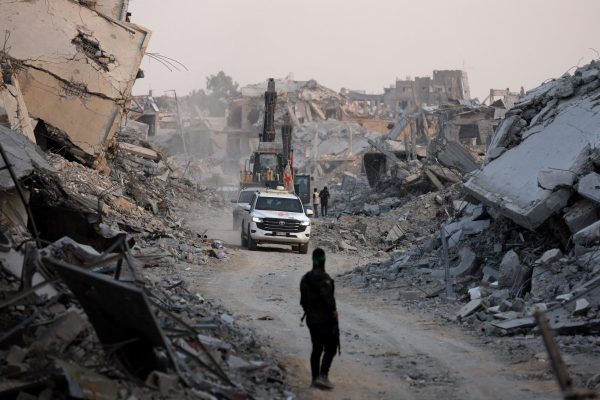
A genuine military mission would call for precision, planning, and intel. Across the years, Israel has not only “accidentally” bombed schools, hospitals, and other infrastructure and civilians, but also its own people. Israel’s missions are sloppy because they are trying to eradicate neighboring countries like Egypt, Palestine, Lebanon, Jordan, and Syria. On IDF soldiers’ uniforms, they wear a patch that has a “Greater Israel.” To achieve a “Greater Israel,” Israel would need to occupy and expel over five different countries.
A “Greater Israel” would begin in 1982 when Israel attacked Lebanon, beginning the Lebanon War. First, Israel held a siege on Beirut until it could remove the Palestinian Liberation Organization (PLO), which would help to remove Syrian influence in Lebanon. Next, Israel then installed a pro-Israeli Christian government under the leadership of Bachir Gemayel. On September 14th of 1982, Habib Tanious Shartouni, a member of the Syrian Social Nationalist Party, detonated a bomb during a Kataeb Party meeting, for collaborating with Israel during the Lebanese Civil War.
From September 16th until September 18th, the IDF allowed predominantly Christian Lebanese militias, which were a faction that came from the Lebanese Civil War, to carry out massacres, specifically in the neighborhoods of Sabra and Shatila. Israeli troops were stationed outside the Palestinian Shantila refugee camp to prevent anyone from leaving. Over 3,500 civilians, consisting mostly of Palestinians and Lebanese Shias, were slaughtered. Those killed were tortured before death: women and girls were raped repeatedly, other civilians were skinned alive, had their limbs chopped off with axes and some were tied to cars and dragged throughout the streets. Following the massacres, the IDF arranged for bulldozers to bury the bodies and demolish camps.
After being forced by the United Nations to withdraw from Beirut, Israel continued to occupy Southern Lebanon. From September 3, 1983, until May of 2000, Hezbollah, a Lebanese Shia political party and paramilitary, and Shia left-wing guerrillas, fought against Israel and the Catholic and Christian South Lebanese Army. During the war, the Sohmor massacre occurred on September 20, 1984. The Israeli-backed South Lebanon Army killed 13 civilians.
From July 25, 1993, Israel launched two operations, Operation Accountability and Operation Grapes of Wrath. Operation Accountability was proposed as a way to make Southern Lebanon a difficult place to make an arms base and to displace Palestinians and Lebanese civilians to invoke a response from the government against Hezbollah. Over 120 Lebanese civilians were killed and over 500 were injured. Over 300,000 Palestinian and Lebanese refugees were displaced. Israel destroyed over 1,000 homes, damaged over 16,000 other homes, and damaged religious buildings like chirches and mosques, as well as damaging other protected buildings like schools and cemeteries. Israel also shut down electricity and water to civilians in Lebanon. Other war crimes Israel engaged in include: attacking fleeing civilians, blocking and attacking relief organizations and ambulances, attacking refugee camps and a market with no military objective, using flechettes, a type of fin-stabilized steel projectile normally launched by aircraft to pierce through people below and white phosphorus. Operation Grapes of Wrath began on April 17, 1996, and lasted seventeen days. During these seventeen days, Israel killed over 154 Lebanese civilians and injuring 351 others.
On April 13, 1996, the Mansouri attack, Israel falsely claimed an ambulance was being used to transport fleeing Hezbollah members. Israel rocketed an ambulance that contained two women and four children. No military gear nor personnel were found at the scene or insdie the ambulance. Similarly, on April 18, 1996, the Nabatieh Fawka attack, Israeli Prime Minister Shimon Press falsely claimed that rockets had been fired from the homes. IDF soldiers, however, claimed the Hezbollah militants were hiding in the homes, but fired the rockets from somewhere else. Nine civilians, including a mother and seven of her children, were killed in the attacks. Also occurring on April 18th, Israel occupied the South Lebanon village of Qana and attacked a United Nations Interim Force in Lebanon (UNIFIL) facility that was sheltering at the time around 800 Lebanese civilians. Israel killed 106 civilians, injured four Fijian UNIFIL soldiers, and injured 166 refugees. The attack was at first denied as being deliberate by Israel, but video evidence proved the deliberation of the attack as evidence from an IDF drone.
On April 30, 1989, during the First Intifada, Israeli Border Police conducted a raid on the West Bank village of Nahalin. Five Palestinian youths were killed because they threw stones at IDF soldiers. Due to this event, a curfew was enacted, and the threat of being shot and killed. Over 50 Palestinians were injured. Both of these are prevented under Article 33 of the Fourth Geneva Convention. Similarly, on October 10, 1990, Palestinians began throwing rocks at Jewish worshippers over tensions about the Sukkot march. Israeli Border Police responded with 40 officers firing automatic weapons at the crowd, killing over 21 Palestinians and injuring over 150. No Israelis died.
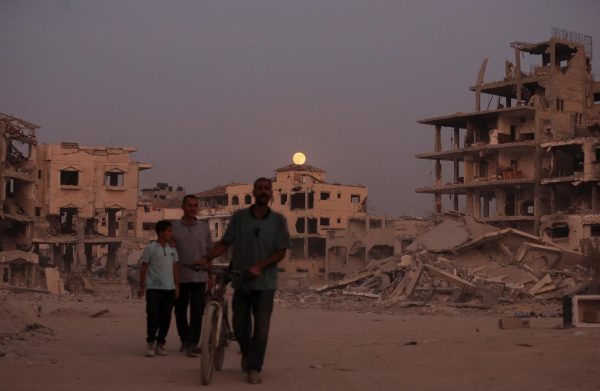
From April 2, 2002, to April 11, 2002, the Palestinian refugee camp of Jenin was under attack and siege by Israel. Operation Defensive Shield occurred during the Second Intifada, which claimed that Jenin was being used as a terrorist attack site against Israeli towns. Human rights organizations charged Israel with war crimes of blocking medical care from reaching civilians even after fighting had ceased, using civilians as human shields, shooting and killing unarmed civilians, bulldozing homes with the residents still inside, one of these instances, Israel knowingly crushed and murdered a severely disabled man, another case killed eight members of a family. Israel also placed explosives on doors, beat prisoners, and kept them in detention; one of these cases resulted in the death of a prisoner, preventing the United Nations from performing an investigation into the events that occurred at Jenin. The mass destruction of homes is a war crime under Article 147 of the Fourth Geneva Convention.
In 2006m Hamas kidnapped IDF soldier Gilad Shalit on June 5. Hamas sought the release of many Palestinian prisoners in exchange. Conventional warfare ensued until a ceasefire was enacted on November 26. No deal was ever made over releasing either of the prisoners.
On July 12, IDF soldiers killed nine members of the Abu Selmiyeh family when a 550-pound bomb was dropped on a building in Gaza City. During a military operation in Beit Hanoun, IDF soldiers used Palestinian civilians as human shields. Forcing Palestinians to accompany soldiers during searches, staying near the soldiers during gunfire, walking ahead and opening doors, and being subject to physical abuse like being tied, blindfolded and beaten.
On June 28, 2006, the Israeli air force bombed Gaza’s civilian electrical plant, which was Gaza’s only electrical plant, leaving over 1.4 million residents without reliable electricity. This had a domino effect into disruptions to essential services like healthcare, water, sewage, and refrigeration.
The 2006 Lebanon War began in July. Hezbollah militants captured two Israeli soldiers. A 34-day war followed, with a conclusive over 1,109 Lebanese deaths, 900 were civilians, 4,399 were injured and one million were displaced. War crimes committed by Israel, as reported by the Human Rights Watch: indiscriminate attacks, disproportionate attacks, sustained artillery bombardment of South Lebanon in civilian areas, attacks on civilian objects and collective punishment.
In the 2008 to 2009 Gaza war, Israeli war crimes consisted of collective punishment, disproportionate force, human shields, white phosphorus and misconduct. Collective punishment became evident when the United Nations Fact Finding Mission on the Gaza conflict discovered Israel attacked Gaza as a whole. In July 2009, Breaking the Silence, an Israeli non-governmental organization, published a 110-page report, which included video interviews of testimonies given by twenty-six IDF soldiers about their actions during the assault on Gaza. These soldiers admitted to using Gazans as human shields, firing white phosphorus shells over civilian areas, and one incinerated a house. Crimes Israeli soldiers were found guilty of committing include: looting, credit card fraud, indecent conduct, authorization of an artillery, white phosphorus attack which endangering human life, authroization of an airstrike that killed the Samouni family, targeting civillians, manslaughter, allowing a Palestinian man to negotiate with Hamas, shrapnel causing injuries to civilians, using a Palestinian boy as a human shield and holding a child at gunpoint. Over 1,400 Palestinians were killed and over 5,000 more were injured. These include men, women, children, and the elderly. The United States and Israel both denounced the United Nations report on the 2008 to 2009 Gaza War. This was known as the Goldstone Controversy. Richard Goldstone reported that Hamas had fired a rocket attack on the Israeli civilian center and the IDF had used disproportionate force and targeted civilians, including children. Israel continuously campaigned against the document and claimed bias. When Goldstone attempted to retract the claim that Israel had not targeted civilians, he was outraged. Israeli pressure to hide its war crimes is a consistent behavior that is very dangerous to erasing vital history.
On November 18, 2012, during the 2012 Gaza War, the IDF authorized an air strike that resulted in the deaths of ten members of the al-Dalu family, which included five children and an elderly woman. Nine other nearby civilians were injured and their homes damaged.
During the 2014 Gaza War, IDF soldiers dropped leaflets over Gaza warning the citizens to leave. This isn’t possible for everyone to do. The IDF was told by their commanders that anything left in the Gaza Strip is a threat. This violates the international criminal law of distinction between civilian and combatant. Two accounts of misconduct were executing a woman and later naming her a terrorist, when she clearly wasn’t, and Lt Col Neria Yeshurun ordering a Palestinian medical centre to be bombed, the motive wasn’t military action, but instead a punishment to the Palestinian people as an IDF sniper had died in combat.
Israel struck three UNWRA schools using drone-fired missiles, as well as over 72 homes. 547 civilians were killed, 125 of those were women under 60 years of age, 250 were below the age of 18, and 29 were over the age of 60. In total, 89 complete families were wiped out. Nine others were killed in a cafe while watching the World Cup. These are clearly civilians and not combatants; there is no reason they should be harmed.
According to Article 57 of the Additional Protocol I (1977) of the International Humanitarian Law, warnings to civilian areas and populations must be given with an adequate amount of time to evacuate. Israel did not provide adequate time for civilians to evacuate. Israel did prompt phone calls, leaflets, and roof knocks to warn civilians, but the majority of the time, Israel releases inadequate or no warnings to civilians. A safe passage must also be provided; this was never the case, nor were bomb shelters identified. In January 2015, Physicians for Human Rights, a nongovernmental organization, released a statement that the Israeli warning system had failed and roof knocks did not do enough. Roof knocks are when the opposition in war drops low-yielding bombs on the homes of civilians to warn them to leave before a larger bomb strikes. The Euro-Mid Observer for Human Rights at the Geneva-based convention in 2015 argued that roof knocks are lethal and proposed insufficient time. Israel allowed only one minute (rarely five is allocated) before following with catastrophic attacks.
During the 2014 War, Israel targeted and destroyed over 7,000 homes, damaged 89,000, and severely damaged over 10,000. There were 59 separate incidents documented of bombing and shelling civilians, and over 458 people were killed. Israel once again falsely claimed that the homes were used for military purposes. Over 60,000 people were left homeless after the attacks.
Inside the now crumbling homes, there was a trashed interior. Writing on the walls and furniture contained messages like, “Burn Gaza Down,” and “Good Arab=Dead Arab.” Electronics like TV sets were bashed in and destroyed. IDF soldiers didn’t hesitate to spread their feces across the interior of the homes either.
On November 15, 2014, Amnesty International published a report examining eight cases. The total deaths in the eight chosen cases were 111 people; 104 were civilians. In every single case, there was a failure to provide precautions to avoid harm to civilians, no prior warning to civilians about the attacks and no time to escape. Israel violated international law by attacking civilians and civilian objects and other disproportionate acts. Israel dismissed the claims, claiming it was a propaganda tool for Hamas.
Between July 21 and August 3, 2014, there were seven shellings at UNRWA facilities in the Gaza Strip. Artillery, mortars, and aerial missiles were used at or near these buildings, resulting in the deaths of 44 civilians, including ten United Nations Aid Staff and over 277 Palestinians were injured. Over 300,000 people, which is roughly 15% of Gaza’s population, were seeking shelter at these UNRWA facilities. On July 16, 22, and 29, UNRWA released a statement stating that they discovered rockets in their schools. Israel later blamed Hamas for where the fighting was taking place. Hamas has repeatedly abused access to UN facilities, with three cases of munitions storage found.
On July 23, 2014, twelve human rights organizations contacted the Israeli government about the collapsing infrastructure in Gaza that was currently paving the path to a humanitarian catastrophe. Eight of the ten power lines in Gaza, that come from Israel, have been damaged. Three were taken down by Hamas rocket fire. On July 29, 2014, Israel was in the midst of Operation Protective Edge. This was a 50-day-long conflict with Israel targeting over 70 sites, including Gaza’s only power plant, which took over a year to repair. Luckily, the power plant resumed operation on the 27th of October. Over 30 Palestinians were killed, and 180,000 Palestinians were displaced, including women, children and men.
In the 2014 Gaza War, a minimum of 16 journalists were killed, five of whom were off duty at the time. International humanitarian law prevents journalists from being slaughtered during war, as they are there to provide information on what is occurring. Journalists wear vests, hats, and ride in vehicles clearly labeled as journalists. Israel, in contradiction with humanitarian law, had journalists sign a waiver that states they are not responsible for harm done to journalists whilst in Gaza. Israel also bombed Hamas’s Al-Aqsa radio for “propaganda,” however, according to the 1999 Yugoslavia NATO International Criminal Court, the radio is still considered media and cannot be bombed even for propaganda.
Navi Pillay, the UN’s High Commissioner for Human Rights, noted that Israel deliberately “defied international law by attacking civilian areas of Gaza,” which included schools, hospitals, homes of families, and United Nations facilities. In January of 2015, the Jaffa-based nongovernmental organization, Physicians for Human Rights, released a statement mentioning the IDF using human shields. Another organization, Defense for Children International-Palestine, released a report on a 17-year-old boy named Ahmad Abu Raida, whom the IDF suspected of being a militant. He was kidnapped by IDF soldiers/ The soldiers beat him, forced him to walk in front of guns and police dogs, for five days be used him as a human shield, digging in areas suspected of tunnels and searching homes.
In 2015-2016, several human rights organizations documented Israeli forces performing extrajudicial killings. Extrajudicial killings are the deliberate killings of a person without lawful authority. Extrajudicial killings mainly occurred at checkpoints in the West Bank. Concerns arose when Palestinians who posed no threat at all were victims of lethal force by the IDF soldiers. In Israel, Israelis are taught that Palestinians are not human, nor truly is any Arab, which is a blatant lie and racism. On September 22, 2016, 18-year-old Hadeel al-Hashlamoun was shot multiple times at a checkpoint in the southern Palestinian town of Hebron. She posed no threat. On March 24, 2016, Elor Azaria shot Abdel Fattah al-Sharif at point-blank range. Abdel was already lying on the ground unresponsive before Elor Azaria murdered him. Azaira was sentenced to the unjust sentence of 18 months.
During the 2015-2016 violence wave from Israel. IDF soldiers murdered over `20 Palestinians, injured over 12,000 Palestinians, which included protestors, bystanders, and suspects. The United Nations expressed concerns about the unnecessary excessive force from Israel against Palestinians, specifically in the West Bank.
In May of 2019, Human Rights Watch reported Israeli airstrikes on non-military buildings and civilians, causing significant civilian harm. On May 5, 2019, Israel bombed civilian homes, cafes, and various workplaces, killing over 13 Palestinians. In Beit Lahiya, a pregnant woman and two others were killed in an airstrike.
From November 12 to 14, 2019, Human Rights Watch released a report that two Israeli airstrikes killed eleven civilians, including women and children. On November 14, 2019, the Al-Sawarka family lost five children and three adults. Twelve others in the surrounding area were injured. The family was sleeping when the strike occurred in Deir al-Balah.
Beginning May 10, 2021, Israel and Palestine were once again in an extreme conflict. Human Rights Watch released a statement on May 10th, 15th, and 16th of Israeli airstrikes with no military in the vicinity, violating international law. Over 62 Palestinians were killed. Israel bombed the high-rise residential apartments and structures in Palestine, which is also a war crime. In 2021 alone, over 128 Palestinian civilians were killed. This included 40 women and 63 children murdered, with over 2000 others injured, including 600 children and 400 women.
On August 7, 2022, five children were visiting a grave at the Al-Falluja cemetery. Those children never left that cemetery as they were killed by a missile from Israel fired by the IDF.
May 2, 2023, Khader Adnan Mohammad Musa died of an 87-day-long long hunger-strike to protest his arrest in Israel without a trial. He was a Palestinian activist who was also arrested twelve times by Israel.
On May 9, 2023, Israel launched three attacks using precision bombs at 2:00 a.m.. In the attacks, three senior Al-Quds Brigades (paramilitary organization) commanders were killed, along with six Palestinian civilians and four children, and injuring over 20 others. In addition, destroying Palestinian homes without military necessity is also considered an international war crime against humanity.
The list of war crimes between October 7th, 2023, and the present day, 2025, is robust and continuous.
The reason behind killing women and children is used so often in genocides is because it prevents a future for that specific group that is being targeted. Women are needed to have children and mother the children throughout life. The children are needed because they are the future of that civilization. If the person perpetrating the genocide can knock out both these factors, then there isn’t much left of the targeted group.
Torturing the men is another large tactic. Along with natural biological advances like strength, men can also become slaves to the perpetrator. Israel specifically uses sexual humiliation and humiliation in general, along with violent torture. Breaking the human psyche can lead to disastrous effects for that individual and on the people around them. This prevents an easy way to begin relationships, which could result in children. It also prevents a healthy mind. Mental health is serious, and someone more prone to suicidal intentions can knock more people down when the genocidal perpetrators can’t puppet everyone for one reason or another.
For over 75 years, Israel has managed to continuously get away with these horrendous war crimes, and the list grows every day. Protesting, advocacy, and educating others can help to bring attention to these recurring war crimes and put an end to this genocide.