It’s bright and early when the school day begins on campus. As the teacher pulls his materials from of his backpack, it is not a set of books for the class to read as his student expect. Instead, a video game console appears on the podium to everyone’s surprise. As he starts teaching his lesson, showing the students the expansive world of the game he’s playing, suddenly everyone is engaged in the story unfolding in front of the class.
The idea of video games being used in the classroom is not an ancient one, and has certainly been explored before. The concept of video games is so expansive and their uses has not been fully explored yet. The concept of them appearing as literary tools in classrooms hasn’t been touched either – but video games are untapped resources as literature.
The Idea
As games have progressively grown more and more to be an idea bigger than people could have ever imagined. The evolution from the first games and their crude animation to today’s games with animation more advanced than motion pictures leads to the possibility of games being more than games later down the road.
“I love the idea of video games being a part of something as we move forward,” Principal Eric King said. “I know for a fact that we can pull a student who was struggling in language or English and right now who does not meet the basic approaches or masters in STAAR, and we can see what their basic draw was. Whether or not that’s a video game, that’s our job. We need to find ways to make our students learn.”
Because of how much games have grown, they turned into not just things to do for fun, but genuine real stories that the average person could enjoy, especially to a teacher who explores what stories truly mean.
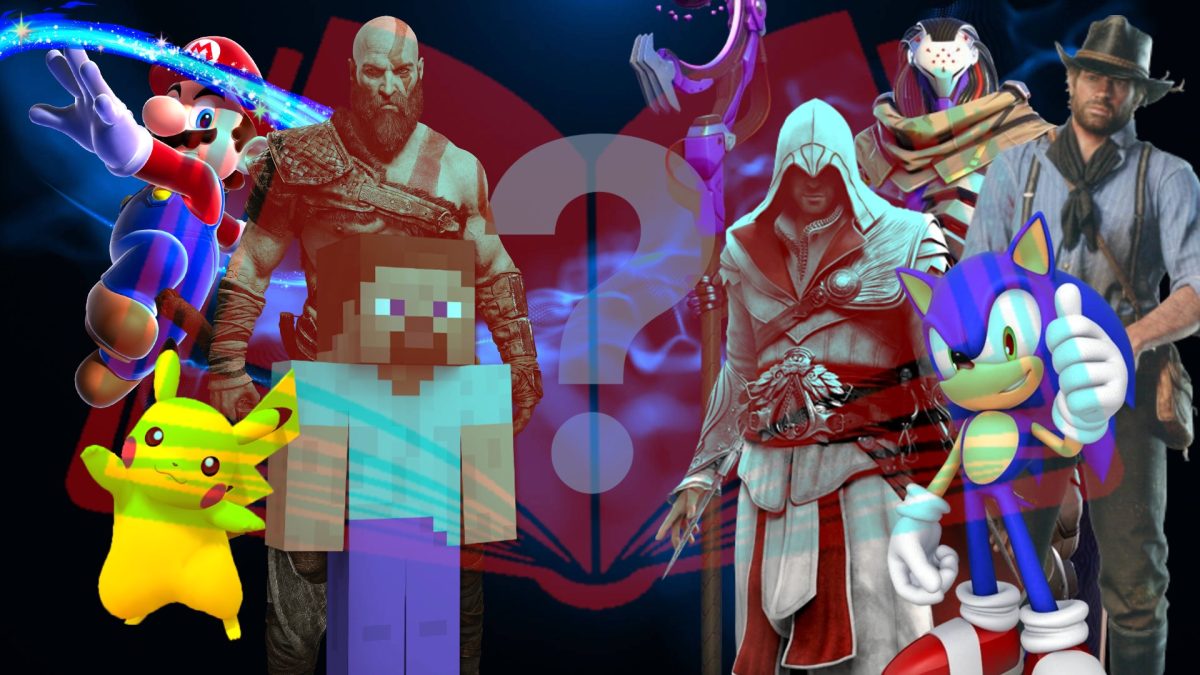
“A lot of video games have such great stories,” English teacher John Lewis said. “Examples like Fallout and The Last of Us have come up as being turned into tv shows, but other interesting examples of this working could be like Pokémon, or even one of my favorites being Assassin’s Creed, which would show a lot of kids how Greek mythology happened throughout the years.”
Outside of school students already play these games all the time. The target audience for video games has already learned what great and rich stories they have.
“I am absolutely obsessed with story-based games,” senior Alexia Rezio said. “I think it would be a super cool addition to our English classes because you can explore so many different aspects. There are many games where you could talk to different NPCs and get multiple different storylines, and they always have depth. It could even be good for projects where you have to do deep dives on individual characters you thought didn’t matter at first.”
Many kids have already wished to write about their favorite games anyway. The stories and potential learning lessons they bring is just too vast.
“You could assign certain games to specific people who would want them,” sophomore Zack Smyth said. “They could easily have more comfort in their assignments. For example I’d love to write about Red Dead Redemption ll. I’d like to write about how Arthur Morgan’s morality changes throughout the story.”
Movies & TV Shows
In classrooms teachers have seen the value of using movies and tv shows to support their curriculum. If these huge versions of stories are used for analysis, then video games could easily fit as well with their own stories.
“Frequently we have used other media for things like author’s craft,” English teacher Chelsea Bennett said. “I’ve used Coraline as a big example. We usually watch movies of popular works after we finish the book like The Crucible, and even last year we watched The Pursuit of Happiness, in order to analyze the struggles of chasing the American dream.”
This isn’t a rare occurrence to happen in the classroom either, teachers all over the campus have used movies and tv shows time and time again to teach their students.
“Several times we’ve done novel studies and have followed up with the movie,” English teacher Camden LeLeux said. “We’ve done it for cross examination multiple times. We integrate those sorts of media all the time. There have been instances where I use video game connections all the time in my lessons already.”
Teachers even believe that the stories books provide are comparable to those stories from video games.
“We’ve used many movies before like Hercules and The Truman Show,” Lewis said. “As far as other media we have used books like Patron Saints of Nothing, Call of the Wild and The Glass Castle. The idea of games hasn’t come up before. I’ve actually never had a student or a coworker introduce the idea to me yet.”
Many students to this day still remember times that they used movies in the classroom. It was some of their most memorable things they enjoyed working on.
“We had gone over Frankenstein in class,” senior Trystyn Buddy said. “After going over the book, we got to watch the movie, and I enjoyed watching it on my own time on Netflix, although something like a video game sounds like it would be more exciting. I think it just relates more to the student and makes it more interactive.”
English ll honors worked with the movie The Truman Show. The lesson integrated the movie is multiple assignments regarding media literacy and beyond.
“A good thing that was brought up was The Truman Show,” Rezio said. “We talked about it quite a bit with other people, but I really enjoyed it a lot. It gave a new piece of media to explore, and kind of a new way to explore ideas. I thought it was a very effective way to teach us in English class, and it showed other media work as well.”
If games were used in this very same way, it would cause more people to listen, and it would cause more people to actively strive towards learning things they didn’t know.
“The people who don’t participate would probably be more interested in participating,” junior Nick Warn said. “Grades would probably go up a lot. I believe a lot of games show realism and mistakes, and it would be good learning lessons to pivot on that, and create more interesting topics to talk about in class.”
Specific Examples
Teachers have found that making connections with games can grab the attention of students who are tuned into the gaming world.
“I often use Call of Duty as an example,” LeLeux said. “When we talk about point of view, sometimes people get confused on what first person and third person means. Then I ask them, ‘Okay, have you ever played Call of Duty before?’ Then they just realize it’s a first person shooter, and their confusion is solved.”
Teenagers spend most of their free time on this sort of technology, so it’s not a surprise they’re able to name examples of times they could easily use video games for literary analysis.
“I would love to write about Diablo,” Smyth said. “You go through so many changes with your characters, such as your family dying from the very start which leads into so much rich character development further on in the story. In most stories it’s just a fixed storyline, but with a lot of video games out there you get to change it up. It allows the answer to the assignment to be a little different from everyone else’s.”
Many kinds of different stories have come across the minds of all teenagers around. There are so many video games out there that act as someone’s favorite, which just means it’s all the more likely someone would want to write about it.
“I would love to write about Stardew Valley,” Rezio said. “I would go into some of my favorite characters and all of the other stuff that dives into the story I love about the game. There is just so much I could talk about with Stardew Valley, and I could argue for hours over the NPCs. There are so many examples of ethos within the characters, a lot of pathos that touch upon the characters’ actions, and logos with all of your logical quests. There are so many different rhetorical appeals you can find in a game.”
These examples could also expand to games that students are looking forward to. Whether that is through a game that comes out year by year with a new chapter in it’s story, or it’s a game that has been hyped up for months to come out.
“I feel that it could be used for analysis so long as the video game itself has lore and an overall storyline such as an RPG,” junior Madeline Bruce said. “Unfinished games even could be used as an analysis like Poppy Playtime, because the end of the chapters allow one to try predictions on what they will think will happen due to past experiences with chapters leading up to it.”
It’s not just the students either, as many teachers would be ready to drop everything, and teach teenagers about how their own personal favorite video games teach different aspects of education that are within the curriculum.
“I would probably make a whole unit over Assassin’s Creed: Odyssey,” Lewis said. “It would introduce a lot of kids into Greek mythology as a whole, which is especially important for recent events that are going on in America. As far as English class goes, I could teach the ideas of allusion. That’s referencing older material in newer material, and I just personally feel like that game does a good job of following that sort of ideal. It doesn’t sugarcoat what happened like other media.”
Teachers being able to pick a game of their own to teach would also allow them to explore their own creativity. Many tools of literary analysis and criticism can easily be applied to an example a teacher themselves picks out.
“If we’re talking about something like a rhetorical situation you could look at the Spider-Man games on the PS4,” LeLeux said. “Those games constantly have you doing your superhero thing, all the while you’re getting updates from J. Jonah Jameson saying to the whole city about how Spider-Man is a menace, showing how he’s a bad guy and only working for himself. So throughout this whole playthrough of this game you see two different perspectives of one overall story, and how differing viewpoints affect the citizens as well.”
Even if there is a gap of an entire generation between teachers and students, teachers feel video games being used in these environments could easily create a step in the right direction for getting students to relate to their teachers.
“I believe that my interest in video games is much different than a students’,” King said. “However if there was some sort of example that followed similarly to this movie I did an essay over back in Sam Houston State University, Troy: The Odyssey, it would be what I pick. If not then it would easily be something that gets hands-on experiences for students, just something that offers chapters similar to Odysseus’ path.”
Issues with Implementation
Although the idea of this happening sounds absolutely rich with creativity, it would require a huge amount of effort to get into classrooms. Especially if those classrooms are teaching English or literature.
“You would have to have approval by the state,” King said. “It’s something that not only the district board would have to agree on, but the state of Texas would have to allow us to use. Getting that through the campus, especially with video games, we would have to utilize ideas like the library. It’s just like a movie’s rating system, it’s to where you would have to find something rated in a specific way, and it would have to be supported by the district.”
Having to go through and select each individual game to be approved within the school board would take what feels like a millennia. It just acts as a major elephant in the room when you look at the ratings of games.
“I think that it’s definitely possible but it would be hard for the selection process,” Lewis said. “Here in Texas they make us report exactly what books are sitting on each teacher’s bookshelf due to censorship, and to make sure it’s appropriate text. With video games it would be much the same, but you also have to consider the violence. If we were to ever get to that point though, I would love to teach a lesson over Grand Theft Auto to teach those ethics.”
It’s not adult bias either, as even some students realize the issues that could arise with video games coming into the classroom this way.
“I personally think that games in English could be a good idea but it does have a lot of pros and cons,” senior Scott Simoni said. “It could evolve into the world but not in a good way, I see a ton of issues that could come with it. An example is that the parents could try to fight this by having the age old concern that video games make people violent. A game that could work that doesn’t roll down into blood or gore but is still story rich would be Animal Crossing.”
Many teachers believe that this is something that should be happening. Some have even already gotten examples of video games and their deeper meanings from students.
“My main concern with video games being widespread in this aspect is accessibility,” Bennett said. “If a student wanted to choose a media platform for an assignment, I’d be more than willing to accept video games as a form of that, as many of them generally use storytelling. Right now my students are doing a project over weaponized fear, so if there was a game that goes back in history and showcases that I’d be more than willing to accept it.”
Use in Classrooms
The amount of things that would shift in education would be great, but it’s not something that is not seen by higher officials. It’s something that is being slowly realized into the future.
“I think it’s needed,” King said. “The way I had learned back in the 90’s was just sitting down in a classroom with the chalkboard. It’s our job to entertain a student, and with how deep and expansive video games have become, I think it just has a certain draw to it.”
Games are technically already in the classroom as well. Sometimes it could be in a negative off-task sort of way, but the connection between games and school has always been present the day chromebooks were introduced.
“I feel like if you look around in classes everyone is playing a video game,” Rezio said. “It’s something students always wanna go to, so if you add it to the curriculum, and make it something fun where there are options for it, I think grades would go up exponentially. At that point they’re actually paying attention to something they enjoy.”
Sometimes the idea of games being used for learning topics has already been done, and sometimes it’s even within a whole different generation.
“I personally remember I had a class in middle school that used The Oregon Trail as a history lesson,” LeLeux said. “It was very fun, and it showed us not only how the game progressed, but it was kind of a snapshot at what life was like for the pioneer age. We got that history lesson and a lot of fun out of it.”
Even other campuses around Texas specifically have implemented games into their learning environments heavily. That doesn’t just include English classrooms either.
“When I went down and visited Forney High School they had a full on esports lab,” King said. “There were just seats, games and monitors everywhere. It was set up where a regular computer lab would look like it was modified to the video game experience. Y’know in saying that it feels as if our district is behind with not pursuing that idea. There would have to be some way for us to do that. We need to make that first room in that direction.”
It’s possible that maybe the answer this whole time was to make games as easily accessible as grabbing a book off of your teacher’s shelf. There’s even some cases where you can get a book around a video game’s story in that very same classroom.
“There are so many examples of games being adapted,” LeLeux said. “The God of War games have been adapted into comic books, The Legend of Zelda: Twilight Princess has a famous manga series that I even have just right in my classroom. The stories are written just like books and video games, the only difference is that you are in control of the story.”
There could be a future where the current generation has grown up to teach their kids about the newest Super Mario Bros. game, and how it showcases the change in our lives.
“I don’t know how it would happen but I do think it will,” King said. “when I was sitting at a student’s desk, I didn’t know we would ever be using computers and AI 20 or so years later. The only things we used to have were just a basic calendar and a notebook, and now everyone and everywhere there is technology. I do think it’s feasible for video games to be a part of that for education, at what level I don’t know. Even now we have a video game design class here at Willis, and a newly made esports club. I think it’s just gonna have to require a lot of trial and error.”